From Pilot to Multiple Business Lines: Staged Rollout and Scaling Logistics Agents

The parcel-tracking pilot ran for a quarter with true resolution, satisfaction, and cost per service all green, and the team confidently copied the same agent into the claims business line—two weeks later the complaint rate doubled: claims' rule differences, approval chains, and authorization boundaries had never once appeared in the tracking scenario. Pilot success does not mean you can copy wholesale; that is the most expensive lesson of the scaling stage.
This post is part of the "AI Customer Service Product and Engineering Practices" experience-sharing series, drawn from a practice review of an AI customer service product at a leading logistics company. In this post I want to share how to set scenario priorities, staged rollout, acceptance criteria, and a scaling playbook when an AI agent has achieved good results in some logistics service scenarios and needs to expand to more business lines — while balancing resolution, user experience, and operating cost. This is the watershed between a single-point breakthrough and scaled operation.
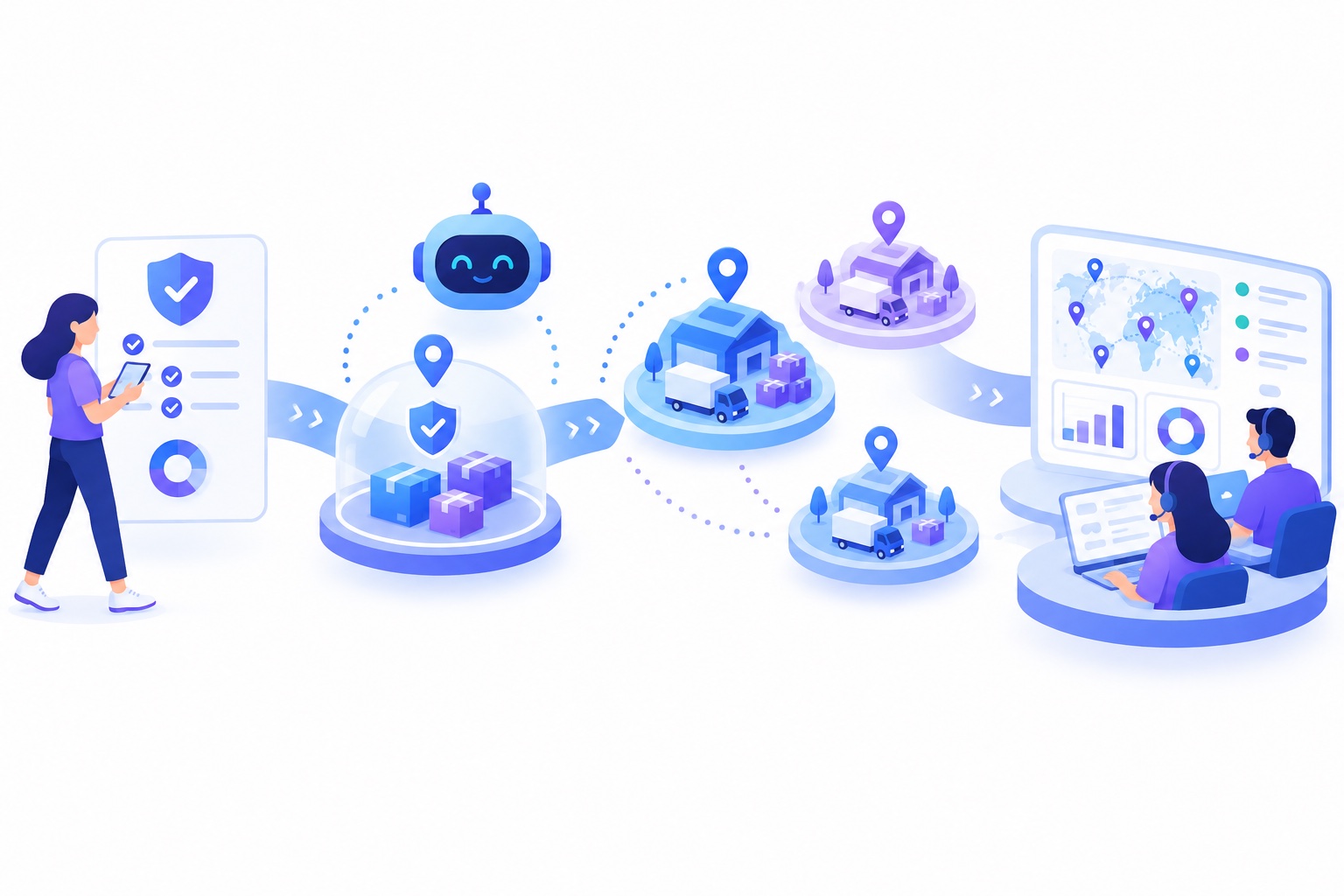
Five Key Design Points in Scaled Rollout
- Priority judgment: a value × feasibility evaluation framework.
- Staged rollout: batched release, observation windows, rollback plans, human fallback.
- Acceptance criteria: offline thresholds + pilot metrics + guardrail metrics.
- Scaling capability: standardization, platformization, organizational support.
- Balancing: tiered experience, cost control, tiered risk.
The Overall Design
In this rollout, I would start by throwing cold water on myself: what can be copied is capability and governance, not business differences. The overall approach in one sentence: rank scenarios by value × feasibility, release in three staged steps, scale through standardization and platformization, and balance experience, cost, and risk on three lines.
Step 1: Rank scenario priorities with "value × feasibility"
- Value looks at inquiry volume, automatable share, and cost-benefit for the scenario;
- Feasibility looks at process standardization, system interface readiness, and compliance risk.
By default do standard scenarios like logistics inquiries first, then exception handling, and after-sales negotiation last—but that is only the default order; the actual sequence follows the assessment. Before each scenario goes live, assign owners for rules, systems, and service—a scenario without an owner does not enter the rollout list.
Step 2: Three staged-rollout steps—batched release, observation windows, fallback
Release in batches by business line, region, and traffic ratio, each batch with an observation window and a clear pass line; prepare rollback plans and human fallback in advance. During the rollout, guardrail metrics come first—any anomaly in complaint rate or erroneous execution means stopping, stopping losses before diagnosing. The human takeover queue needs owners and handling deadlines; it must not become an unbounded fallback warehouse.
Step 3: Three acceptance gates
- Offline threshold: pass offline evaluation before launch; core scenarios below the pass rate do not go live;
- Pilot metrics: during the pilot, watch true resolution, satisfaction, and cost per service against a clear acceptance line—miss it and do not expand;
- Guardrail metrics: complaint rate and erroneous execution rate monitored throughout; deterioration means stop.
Step 4: Scaling relies on standardization, platformization, and organizational support
- Standardization: turn skills, SOPs, and scripts into templates and configuration, so new business lines only adapt the differences;
- Platformization: consolidate monitoring, evaluation, staged rollout, and operations tooling into platform capabilities instead of rebuilding per project;
- Organizational support: training, operations SOPs, and responsible owners must keep up—the best tooling is useless if no one can catch the work.
Step 5: Balance experience, cost, and risk on three lines
For experience, use tiered service and transfer complex problems to humans promptly instead of forcing automation rate; for cost, use model routing and cache reuse to keep unit cost from rising linearly with scale; for risk, use permission tiers and quota control so high-risk actions always stay authorized. Scale and experience are not either-or—grow the standardized share and leave judgment to humans.
Practice in Bytedesk
In the open-source Bytedesk customer service system (GitHub, website https://www.weiyuai.cn ), tool definitions let each business line configure its own external query and action capabilities; ticket templates, workgroup binding, and owner configuration support differentiated service flows and takeover responsibility per line; multi-tenant isolation keeps data and rules from leaking across business lines. The "value × feasibility" assessment, staged release cadence, acceptance lines, and the platformized evaluation system need to be designed on the business side following this post—before copying configuration, verify policy differences and human takeover capacity; pilot success is not a blanket authorization.
Key Takeaways
- Rank scenario priority with value × feasibility: inquiry volume, automatable share, and cost-benefit against process standardization, interface readiness, and compliance risk; default order is inquiries, then exceptions, then negotiation.
- Three staged-rollout steps: batched release, observation windows with pass lines, rollback plans and human fallback—when guardrails deteriorate, stop losses before diagnosing.
- Three acceptance gates: offline evaluation threshold, pilot acceptance line, guardrail monitoring—miss any and do not expand.
- Scaling relies on standardization (skill/SOP templates), platformization (monitoring, evaluation, rollout tooling), organizational support (training, operations SOPs, owners).
- Tiered experience, model-routing costs, permission-tiered risk—grow the standardized share and leave judgment to humans.